Downtown Orlando · ZIP 32803 · National Register Historic District
Lake Eola Heights
Orlando's only National Register Historic District — 487 contributing structures, six architectural styles, and the city's most walkable residential address, steps from Lake Eola Park.
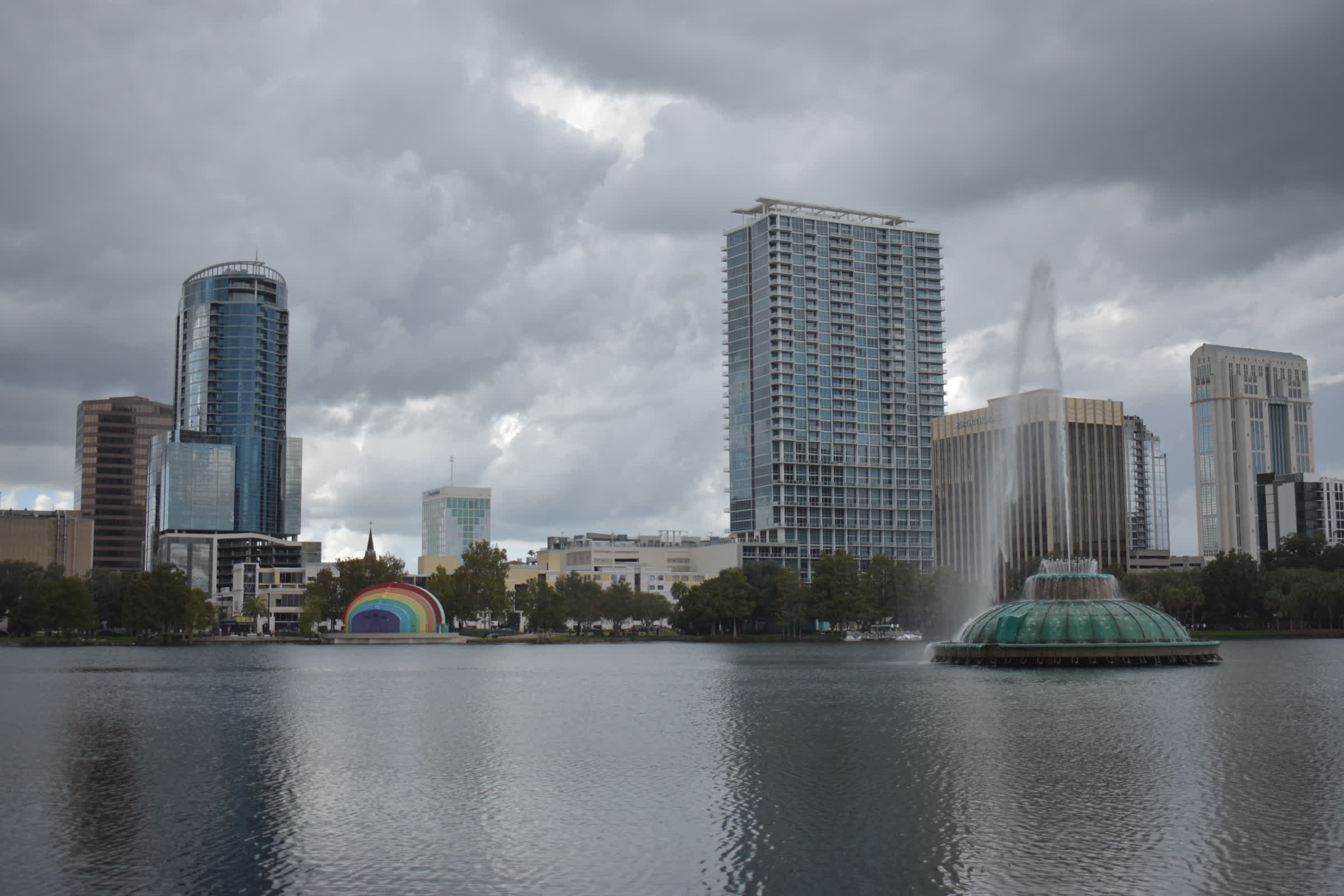
Lake Eola Heights Overview
Downtown Orlando · City of Orlando incorporated · 120 acres · 38 blocks
From citrus groves to Orlando's most significant historic neighborhood
The land that became Lake Eola Heights was originally a 200-acre citrus grove owned by Jacob Summerlin— Orlando's first city council president. The Great Freeze of 1894–95ended citrus operations and triggered the property's subdivision for housing. Development began around 1905, and the neighborhood grew steadily through the Florida Land Boom of 1920–1926, the period that produced most of its 487 contributing structures. By 1940, Lake Eola Heights was substantially complete — a fully formed pre-war residential neighborhood at the city's edge.
Postwar suburbanization and the interstate era brought decline. By the 1980s, the neighborhood's bungalows were selling for $50K–$150K — mostly to young professionals and LGBTQ+ community members who recognized the architectural value and the location's proximity to downtown. A resident-led preservation movement secured the City of Orlando's first local historic district designation in 1989. Three years later, on January 16, 1992, the neighborhood was listed on the National Register of Historic Places — confirming what its residents already knew: this was Central Florida's most significant intact pre-war residential district.
Today, Lake Eola Heights is one of the most sought-after urban addresses in Orlando. Prices have increased dramatically — a bungalow that sold for $120K in 1993 sells for $550K–$700K today renovated. The district's 487 contributing structures across 120 acres remain protected by the City of Orlando Historic Preservation Overlay, which requires a Certificate of Appropriateness for exterior changes visible from the street.
Lake Eola Heights anchors
- ✦ Lake Eola Park — 0.9-mi loop, Sunday market, amphitheater
- ✦ National Register Historic District — listed 1992
- ✦ Thornton Park — 60+ restaurants/bars, steps away
- ✦ Downtown Orlando CBD — 5–10 min walk
- ✦ SunRail Church Street — 9-min walk
- ✦ Dr. Phillips Center — 10-min walk
- ✦ Come Out With Pride — October, Lake Eola Park
How it differs from Thornton Park
Lake Eola Heights is the official National Register Historic District (the regulatory designation). Thornton Park is a separate neighborhood south of Robinson Street with its own commercial district on Washington Street. The two are adjacent, often conflated in casual use, but have different boundaries, different neighborhood associations, and different preservation oversight.
Why this designation matters for buyers
Central Florida's most significant historic residential district
The National Register listing is not merely honorific here — Orlando layers a regulatory Historic Preservation Overlay on top of it, with real consequences for renovation permits and real financial incentives for qualifying rehabs.
The Scale
487 contributing structures
The National Register nomination documents 487 historic buildings across 120 acres and 38 blocks — one of the largest intact pre-war residential districts in Florida. The architectural survey that preceded the listing in the mid-1980s documented buildings from ca. 1890 to 1940.
The Protection
Certificate of Appropriateness
Exterior changes visible from the street — demolition, additions, window replacement, major alterations — require a Certificate of Appropriateness from the Historic Preservation Board before permits issue. This is what preserved the district through Orlando's infill development boom of the 2010s.
The Incentive
10-year tax exemption
Orlando's historic property tax exemption suspends the ad valorem assessment increase from a qualifying rehabilitation for ten full years. On a $700K renovation project, that can mean $5,000–$10,000+ in annual savings — a significant piece of the investment math that most buyers don't factor in.
Architecture
Six styles. One neighborhood. No other Orlando district comes close.
Lake Eola Heights is the most architecturally diverse historic residential neighborhood in Orlando. The Florida Land Boom of 1920–1926 compressed decades of American residential design into a single ZIP code — all within a 10-minute walk of each other.
Craftsman Bungalow
Most numerous1910s–1925
Deep front porches · exposed rafter tails · tapered columns on brick piers · wide overhanging eaves · built-in cabinetry inside
The Florida Craftsman bungalow runs slightly smaller than California examples — typical footprint 900–1,400 sq ft. Original wood windows and hardwood floors survive in the best-preserved examples.
Colonial Revival
Common1915–1930
Symmetrical facades · shuttered windows · columned porticos · brick or painted wood exteriors · center-hall plans
The Colonial Revival examples in LEH are larger on average than the bungalows — some run 1,800–2,400 sq ft on full-sized lots. These are the district's premium historic product.
Mediterranean Revival
Significant1920–1935
Stucco exteriors · clay tile roofs · arched openings · decorative ironwork · courtyard references
The Florida Land Boom years brought a wave of Mediterranean Revival across Central Florida. St. James Cathedral School (1928) at 505 Ridgewood is the neighborhood's finest institutional example.
Mission Revival
Less common1920–1928
Parapet rooflines · minimal ornament · white or cream stucco · clay tile accents
Often confused with Mediterranean Revival — the distinction is the parapet (Mission) versus full tile roof (Mediterranean). A smaller share of the district's 487 contributing structures, but distinctive when present.
Art Deco
Rare1928–1940
Geometric ornament · flat or stepped parapets · streamlined massing · decorative bands
Art Deco appears mostly in the district's later residential construction after the Land Boom collapsed. A handful of examples survive and are among the most unusual in any Orlando neighborhood.
Minimal Traditional / Vernacular
Later stock1940–1949
Simplified massing · modest porches · economical ornamentation · smaller lots
The district's latest construction tier — post-Land Boom, pre-suburban. These are the most accessible entry points price-wise and the most amenable to contemporary interior updates without losing street-facing historic character.
What remains authentic vs. what's been lost
Still original in the best examples:
- ✦ Hardwood floors (heart pine, oak)
- ✦ Original wood window trim and door surrounds
- ✦ Built-in bookshelves, window seats, and buffets
- ✦ Front porches at grade or elevated on brick piers
- ✦ Mature oak canopy — trees 50–80 years old
Most common compromises in renovated homes:
- ✦ Original single-pane windows replaced (vinyl windows in the district typically require CoA reversal to restore)
- ✦ Converted front porches (enclosed for living space — sometimes with permit, sometimes not)
- ✦ Non-original roofing materials over original structure
- ✦ Siding painted over original clapboard profiles
Sub-areas
Five distinct character zones within the district
Lake Eola Heights has no HOA and no formal sub-area administration — the character zones below reflect real differences in price, walkability, and architectural density that experienced buyers in the district learn quickly.
Lake Eola Park Perimeter
$700K–$1.5M+
Park-front · Orlando skyline views · maximum walkability
Homes directly adjacent to Lake Eola Park — the most premium addresses in the district. Front-porch park views, steps to the 0.9-mile loop, Sunday Farmers Market, and Walt Disney Amphitheater. Limited inventory and high owner retention define this micro-segment.
North Historic Core (Livingston to Amelia)
$450K–$900K
Most intact historic fabric · brick streets · deep front porches
The densest concentration of original craftsman bungalows and colonial revival homes. Livingston Street's brick-and-concrete reconstruction is a model of historic traffic calming. Trinity Lutheran (1926) anchors the west end.
Thornton Park Corridor (Robinson to South)
$500K–$950K
Walkable dining · Washington Street · bar district adjacency
Blocks immediately adjacent to Thornton Park's restaurant district — Anthony's, RusTeak, Maxine's on Shine, The Stubborn Mule, and 60+ locally-owned businesses are steps from the front door. Mix of renovated craftsman bungalows and some newer infill at the edges.
Interior Historic Blocks (Hyer to Ferncreek)
$390K–$750K
Quieter · full canopy · best value in the district
The neighborhood's interior streets — quieter than the park perimeter, full historic character, mature oak canopy. Best value for buyers who want the district's architecture and designation without the park-front premium.
South Eola / Magnolia Edge
$390K–$650K
Southern district edge · mixed transitions
Southern and western edges of the historic district, bounded roughly by Magnolia Avenue and the SR-408 corridor. Smaller cottages and more urban-transitional character — highest walkability to the downtown core and the Dr. Phillips Center for the Performing Arts.
The centerpiece
Lake Eola Park — more than a park, it's the neighborhood's front yard
Lake Eola is a 23-acre natural lake in the heart of downtown Orlando, and the park that surrounds it is the defining feature of life in Lake Eola Heights. The 0.9-mile paved perimeter loop is open 6 AM to midnight, used daily by residents who live within a 2-minute walk. On a Tuesday morning, it is populated with joggers and dog walkers. On a Sunday, the Orlando Farmers Market(50+ vendors, 10 AM–3 PM, live music, beer garden) transforms the park into the metro area's most authentic weekly community gathering.
The Walt Disney Amphitheater on the west side hosts free community events year-round — outdoor movies, Orlando Philharmonic performances, cultural festivals, and dance productions. The amphitheater anchors a cultural calendar that draws residents to the park on evenings when other parts of Orlando are car-bound.
In October, the park becomes the center of Come Out With Pride— one of the Southeast's largest LGBTQ+ Pride events, with a parade, vendors, food, and fireworks at dusk. The event draws tens of thousands and is the annual cultural signature of the neighborhood's character. Lake Eola is also home to the city's famous resident swans, a Chinese pagoda gift from Orlando's sister city, and swan boat rentals that function as a low-key weekend attraction for families.
Park features
Walking path
0.9-mile paved loop encircling the lake — open 6 AM to midnight daily
Walt Disney Amphitheater
West side of the park · free community events year-round: outdoor movies, concerts, dance performances, cultural festivals
Orlando Farmers Market
Every Sunday 10 AM–3 PM · 50+ vendors · seasonal produce, artisan crafts, baked goods, beer garden and live music
Come Out With Pride
Every October — one of the Southeast's largest LGBTQ+ Pride festivals, parade, fireworks at dusk
Swan boats & wildlife
Famous resident swans · swan boat rentals · Chinese pagoda on east side · excellent birdwatching
Playground & recreation
East-side playground · park benches · public restrooms · picnic areas
Orlando Philharmonic & theater
Walt Disney Amphitheater hosts performances by the Orlando Philharmonic and traveling theatrical productions
Schools · OCPS
Hillcrest at 10/10 — and a 10-year tax break on renovations
Lake Eola Heights falls primarily in the Hillcrest Elementary / Howard Middle / Edgewater High feeder pattern. Hillcrest is one of the highest-rated elementary schools in Central Florida. Confirm zoning at the OCPS Find My School tool — the district's edges can cross into different attendance zones.
Elementary & K-8
| School | Grades | GreatSchools | Note |
|---|---|---|---|
| Hillcrest Elementary | PK–5 | 10/10 | Florida School of Excellence 2024–25 · within walking distance of the district |
| Blankner K-8 | PK–8 | 9/10 | A- Niche · 76% math proficiency · 810 enrolled · strong K-8 continuity option |
| Lake Eola Charter School | K–5 | Varies | Charter option within the area — confirm current enrollment |
Middle
Howard Middle School
6–8 · GreatSchools 8/10
Gifted & Talented magnet · 800 E. Robinson St — walkable from the district
High
Edgewater High School
9–12 · B · 97% graduation
AP courses · Project Lead the Way · Gifted programs · IB-adjacent course options
Jones High School
9–12 · Varies
Some 32803 addresses fall in Jones zone — confirm at OCPS Find My School
Private alternatives (10–25 min drive)
- Lake Highland Preparatory School — PK–12 · Niche A+ · ~27,000/yr · 10 min drive · one of Orlando's top private schools
- Bishop Moore Catholic High School — 9–12 · Niche A · 25 min · college-prep Catholic
- The Christ School — K–8 · independent Christian · downtown Orlando · 5-min drive
- Orlando Junior Academy — K–8 · downtown adjacent · 7th-Day Adventist affiliation
Dining & Walkability
60+ locally-owned businesses within walking distance
The Thornton Park District (adjacent) is recognized as a National Historic Trust Main Street program — a walkable commercial district with a European feel and more than 60 locally-owned restaurants, bars, boutiques, and service businesses.
Anthony's Thornton Park
30 years of world-class pizza on Washington St — the neighborhood institution
Maxine's on Shine
Beloved brunch spot · outdoor seating · LGBTQ+-welcoming · Shine Street
RusTeak Thornton Park
Farm-to-table dinner with serious cocktail program
The Stubborn Mule
Gastropub on Washington St · patio · live music weekends
Celine
French-inspired bistro · intimate · Park Ave of Thornton Park
Sette
Italian · Washington St · wood-fired pizza and pastas
310 Lakeside
American cuisine with Lake Eola Park views — the obvious special-occasion address
The Hall on the Yard
Downtown food hall · 10-min walk · diverse vendors and weekend programming
Bem Bom
Portuguese flavors · downtown · 10-min walk or 3-min drive
Milk District (South Orange Ave)
5-min drive south — Orlando's indie bar/restaurant strip with 30+ locally-owned venues
What walkability actually means here
In most of Central Florida, "walkable" means "you can technically walk to the Publix." Lake Eola Heights is the exception. Residents routinely walk to dinner, walk to the farmers market, walk to concerts at the amphitheater, walk to the Dr. Phillips Center for performances, and commute on foot to downtown office jobs. The Walk Score for the district's core blocks runs in the high 80s–90s — genuinely rare in a car-dependent metro.
This walkability premium is real and quantifiable: equivalent-condition bungalows on the Lake Eola park perimeter sell for 25–40% more than comparable homes on interior blocks — not for the architecture, but for the morning-walk-to-the-farmers-market lifestyle premium.
Commute & Access
5 minutes to downtown. 9 minutes to SunRail. 25 to MCO.
The CBD half-mile walk and the Church Street SunRail station define the commute profile. For drivers, I-4 and SR-408 on-ramps are under 5 minutes.
| Destination | Time | Route / Notes |
|---|---|---|
| Downtown Orlando CBD | 5–10 min walk · 3 min drive | Half-mile from most addresses — rare urban proximity in Central FL |
| SunRail — Church Street Station | 9 min walk | Northbound to Winter Park, Maitland, Sanford; southbound toward Kissimmee |
| Dr. Phillips Center for the Performing Arts | 10 min walk | W. Church St — no car needed for most shows |
| MCO — Orlando International Airport | ~20–25 min | Via SR-408 east · one of the closer in-city neighborhoods to the airport |
| Universal Orlando | ~15 min | I-4 west to Exit 75A |
| Walt Disney World | ~25–30 min | I-4 west or SR-408 · heavier during park peak hours |
| Winter Park | ~15 min off-peak | Via Edgewater Dr or I-4 north to Fairbanks |
| Lake Nona / Medical City | ~25–30 min | SR-408 east to SR-417 |
| Beaches (Cocoa Beach) | ~55 min | SR-528 Beachline east · closest Atlantic beach from downtown |
Market Data · 2026
Median sold price ~$650K — up 118% year-over-year
The historic premium is real and has accelerated. A craftsman bungalow that sold for $350K in 2018 trades today for $550K–$700K renovated. The district's limited supply — no new contributing structures can be added — drives long-term appreciation above the broader Orlando market.
| Tier | Price Range | Terms | Description |
|---|---|---|---|
| Lake Eola Park-front | $800K–$1.5M+ | Cash or conventional | Homes on Eola Dr, E. Central Blvd, N. Rosalind with direct park adjacency |
| Premium renovated Colonial/Mediterranean | $650K–$1.2M | Conventional dominant | Fully restored 1,500–2,500 sq ft homes on premier blocks |
| Updated craftsman bungalow | $500K–$750K | Conventional | Renovated 1,000–1,400 sq ft bungalows with kitchens and baths updated |
| Original / cosmetic-only | $390K–$550K | Conventional or cash | Unrenovated or partially updated bungalows — renovation arbitrage opportunity |
| Minimal Traditional / later stock | $350K–$550K | Conventional or FHA | Post-1935 simpler homes on interior blocks — most accessible entry point |
What drives the historic premium
- ✦ Supply ceiling: No new contributing structures — 487 is the ceiling, forever
- ✦ Park proximity: Lake Eola Park-front commands 25–40% premium over interior blocks
- ✦ Walkability: The most walkable residential address in the metro
- ✦ Downtown employment: Rare location for CBD workers who want a house, not a condo
- ✦ LGBTQ+ premium: Cultural anchor neighborhood with irreplaceable community character
What to watch on days-on-market
- ✦ Average DOM: ~80–85 days · longer than 2022–23 peak
- ✦ Well-priced + staged: 30–45 days typical
- ✦ Overpriced for condition: Can sit 120+ days before price correction
- ✦ Renovation arbitrage works: Unrenovated homes at $390K–$480K support $550K–$700K exits after appropriate rehab
- ✦ Tax exemption: 10-year Orlando historic exemption improves hold math significantly
Historic Renovation Guide
What you can do, what needs approval, and what you get paid to rehabilitate
Lake Eola Heights' dual designation (National Register + City of Orlando Historic Overlay) creates both obligations and significant financial incentives. Here's the practical breakdown before you make an offer on a project house.
Free to do — no CoA needed
- ✓All interior renovations — no city approval required
- ✓Exterior paint color changes (minor review, typically fast-tracked)
- ✓In-kind repairs using matching materials (windows, siding, roofing)
- ✓Landscaping, fencing, non-structural porches
- ✓New HVAC, plumbing, electrical — no exterior visibility
- ✓Kitchen and bath gut renovations
- ✓ADU / garage apartment if lot size allows (separate zoning review)
Needs Certificate of Appropriateness
- !Additions to the primary structure visible from the street
- !Demolition of any contributing structure or primary facade
- !Replacement of historic wood windows with vinyl (generally denied)
- !New construction on vacant lots in the district
- !Significant alterations to roofline, porches, or primary facade
Contact the City of Orlando Preservation Officer at (407) 246-3350 before submitting permits for any exterior work.
Financial incentives for rehabilitating
- $10-year Orlando ad valorem tax exemption for qualifying rehabilitations — substantial annual savings on a $700K property
- $20% Federal Historic Tax Credit for income-producing properties meeting Secretary of Interior Standards
- $20% Florida State Historic Tax Credit (supplemental, income-producing properties)
- $Florida Division of Historical Resources grants (competitive, periodic availability)
Who buys here
The 6 buyer types Lake Eola Heights actually transacts with
The Walkability Absolutist
Has lived car-free or car-light in another city — Chicago, NYC, Boston, DC — and needs a Central Florida home that doesn't require a car for daily life. Lake Eola Heights is often the only answer in the metro. Typically 30s–40s, downtown employer, DINK or early-family.
The Historic Preservation Enthusiast
Seeks intact pre-war architecture, authentic period details, and the investment thesis that National Register districts in growing cities appreciate above market over 10-year horizons. Willing to do the work — or pay a premium for it already done.
The LGBTQ+ Community Buyer
Drawn by the neighborhood's historical role as Orlando's LGBTQ+ residential anchor, the annual Come Out With Pride at Lake Eola, and the density of welcoming businesses in the surrounding district. Often buying first home in Orlando or relocating from another urban LGBTQ+ neighborhood.
The Downtown Employee
Works at a law firm, bank, city/county government, tech company, or hospital in the CBD. Values the 5-minute commute above almost everything. Often renting in Thornton Park already; buying nearby makes financial sense.
The Architecture Investor / Renovation Arbitrageur
Purchases unrenovated or partially renovated craftsman bungalows for $390K–$500K, renovates to historic standards (or near), and resells or holds as a rental premium property. The historic tax incentives — particularly the 10-year tax exemption — improve the investment math significantly.
The Empty Nester Downsizer
Leaving a suburban estate in Winter Park or Dr. Phillips. Wants a smaller, maintenance-manageable property with walkability, culture access (Dr. Phillips Center 10-min walk), and neighborhood character. Often the Lake Eola-front premium properties.
Hidden Gems
What most buyers miss about Lake Eola Heights
The 1923 cement street
Between Concord and Amelia streets — one of the oldest surviving street surfaces in downtown Orlando. Mostly overlooked; LEHHNA protects it.
Trinity Evangelical Lutheran Church (1926)
Gothic Revival at 123 E. Livingston — the neighborhood's finest surviving institutional architecture and a visual anchor for the historic district.
St. James Cathedral School (1928)
Mediterranean Revival at 505 Ridgewood — bell tower, decorative friezes, ornate entrance. Exceptional Florida Land Boom-era ecclesiastical architecture.
Delaney and Fern Creek brick streets
Both are asphalt-over-brick — OUC utility projects periodically reveal and restore the original brick underneath. Livingston Street's recent reconstruction is the model: brick bordered by concrete bike lanes.
10-year tax exemption
Most buyers don't know: the City of Orlando offers a full 10-year ad valorem tax exemption for qualifying historic rehabilitations. On a $700K–$900K renovation, this is a five-figure annual savings.
Sunday Farmers Market
Not a tourist attraction — 50+ vendors, a beer garden, live music, and a weekly community gathering that functions as the neighborhood's informal town square.
The Chinese pagoda
On the east side of Lake Eola Park — a gift from Orlando's sister city Urayasu, Japan, often photographed and consistently underappreciated as a park feature.
Homes for Sale in Lake Eola Heights
Live Stellar MLS listings · ZIP 32803 · Downtown Orlando
Browse active homes for sale in Orlando, Central Florida, sourced from Stellar MLS and refreshed every 15 minutes. Current inventory includes single-family homes, condos, and waterfront properties across a range of price points.
Honest cross-sell
When Lake Eola Heights isn't the right fit
Lake Eola Heights wins for buyers who prioritize walkability, historic architecture, and urban character. If your priorities differ, here's what we'd recommend instead.
| If you want… | Better fit | Why |
|---|---|---|
| Thornton Park commercial district + Lake Eola proximity | Thornton Park → | The adjacent dining district — different neighborhood boundaries, some overlap in character |
| New construction, walkable urban, downtown Orlando | South Eola / SODO → | Newer condo product, walkable, different price profile |
| Historic + village scale + Park Avenue access | Winter Park → | Different character — suburban historic, Park Ave, Rollins College |
| Historic neighborhood + more space + lower density | College Park → | Craftsman bungalows on larger lots, quieter, still walkable to Edgewater Dr |
| New-urbanist planned community + walkability | Baldwin Park → | Master-planned with front-porch character, newer construction, no historic restrictions |
| Maximum luxury + schools + suburban amenities | Dr. Phillips → | Restaurant Row, Sand Lake Chain, Bay Hill — completely different lifestyle at similar price ceiling |
Lake Eola Heights, FL — FAQ
What is Lake Eola Heights, and how is it different from Thornton Park?
Lake Eola Heights is the official National Register Historic District listed on January 16, 1992 — a 38-block, 120-acre residential neighborhood immediately north and northeast of Lake Eola Park in downtown Orlando. Thornton Park is a separate neighborhood south of Robinson Street with its own commercial district (Washington Street), own boundaries, and own neighborhood association. The two neighborhoods are adjacent and partially overlap in casual usage, but Lake Eola Heights specifically refers to the nationally designated historic district. Lake Eola Heights is also Orlando's first locally designated historic district (1989), three years before its National Register listing.
What are home prices in Lake Eola Heights in 2026?
In early 2026, the median sold price in Lake Eola Heights was approximately $650K — up substantially year-over-year. Entry-level unrenovated bungalows (800–1,200 sq ft) begin around $390K–$500K. Updated and renovated craftsman bungalows run $500K–$750K. Larger Colonial Revival and Mediterranean Revival homes in move-in condition run $700K–$1.2M. The most significant homes — large corner lots, fully restored historic details, direct Lake Eola Park adjacency — sell above $1.5M. Days on market average 80–85 days, though a well-priced, well-presented craftsman can close in under 45 days.
What architectural styles exist in Lake Eola Heights?
Lake Eola Heights is the most architecturally diverse historic residential neighborhood in Orlando. The district contains Craftsman Bungalows (most numerous — the classic 1920s Florida interpretation), Colonial Revival, Mediterranean Revival, Mission Revival, Art Deco, and Minimal Traditional styles, plus earlier vernacular clapboard Farmhouses from the 1890s–1905 period. Most were built 1905–1925 during the Florida Land Boom. The National Register nomination recognized this architectural diversity as a primary basis for the district's significance.
What restrictions apply to renovating homes in Lake Eola Heights?
Unlike the National Register designation alone (which is honorary for private property), Lake Eola Heights carries an active City of Orlando Historic Preservation Overlay. This means exterior changes visible from the street — demolition, additions, major alterations, new construction — require a Certificate of Appropriateness (CoA) from the City of Orlando Historic Preservation Board before permits are issued. Minor work (paint, landscaping, in-kind repairs) follows a streamlined minor review. Interior renovations are generally unrestricted. The upside: Orlando offers a 10-year ad valorem tax exemption for qualifying rehabilitation projects, and federal and Florida state historic tax credits (20% federal + 20% state) may apply to income-producing properties meeting Secretary of Interior Standards.
What schools serve Lake Eola Heights?
The primary zoned schools for Lake Eola Heights (ZIP 32803) are Hillcrest Elementary (GreatSchools 10/10, 2024–25 Florida School of Excellence designation), Howard Middle School (GreatSchools 8/10, Gifted & Talented magnet), and Edgewater High School (GreatSchools 5/10, 97% graduation rate, Project Lead the Way). Blankner K-8 (GreatSchools 9/10, A- Niche grade) is a strong nearby K-8 alternative. Always confirm zoning at the OCPS Find My School tool before closing — streets near the district's edges can fall in different attendance zones.
How walkable is Lake Eola Heights?
Lake Eola Heights is one of the most walkable residential addresses in all of Central Florida. Lake Eola Park's 0.9-mile loop, the Sunday Farmers Market, the Walt Disney Amphitheater, and swan boat rentals are directly accessible on foot. Thornton Park's restaurants and bars — including Anthony's, Maxine's on Shine, and RusTeak — are steps away. The central business district is a half-mile walk. The SunRail Church Street station is a 9-minute walk, connecting riders to the regional rail network. The Milk District (South Orange Avenue indie dining) is a 5-minute drive south.
Is Lake Eola Heights an LGBTQ+-friendly neighborhood?
Yes — historically and currently. Lake Eola Heights and Thornton Park together make up Orlando's historically LGBTQ+ residential neighborhood. From the 1980s forward, LGBTQ+ community members were among the first buyers to purchase and rehabilitate bungalows here when prices were in the $50K–$150K range. The area hosts Come Out With Pride at Lake Eola Park every October — one of the largest Pride events in the Southeast. The neighborhood's character is inclusive and walkable, and the density of LGBTQ+-owned and -friendly businesses in the surrounding district is the highest in Central Florida.
What is the history behind Lake Eola Heights?
The land was originally citrus grove owned by Jacob Summerlin — Orlando's first city council president — who purchased roughly 200 acres in the late 19th century. The Great Freeze of 1894–95 ended citrus operations, and the property was subdivided for housing. Development in earnest began around 1905 and peaked during the Florida Land Boom of 1920–1926, when most of the district's 487 contributing structures were built. By 1940 the neighborhood was substantially complete. After postwar decline accelerated by suburban sprawl and interstate construction, a preservation movement led by local residents in the mid-1980s secured the local historic district designation in 1989, followed by the National Register listing on January 16, 1992. A 1923 cement-paved street between Concord and Amelia streets survives as a rare piece of early infrastructure.
How does Lake Eola Heights commute to downtown and major employers?
Downtown Orlando's central business district is a 5–10 minute walk or 3-minute drive from most Lake Eola Heights addresses — one of the shortest commutes in Central Florida for office workers. The SunRail Church Street station (9-minute walk) connects northbound to Winter Park, Maitland, and Sanford, and southbound toward Kissimmee. Lynx buses serve the corridor. For drivers: I-4 on-ramps at Anderson Street or Colonial Drive are under 5 minutes; MCO (Orlando International Airport) is approximately 20–25 minutes via SR-408. Universal Orlando is roughly 15 minutes via I-4.
What hidden gems does Lake Eola Heights offer that most buyers miss?
Several. The brick streets themselves — Livingston Street, Delaney Avenue, Fern Creek Avenue — are the physical fingerprint of the historic district and one reason it retains the scale of pre-war residential design. The 1923 cement-paved street between Concord and Amelia is a rare surviving infrastructure relic. Trinity Evangelical Lutheran Church (1926, Gothic Revival) at 123 E. Livingston and St. James Cathedral School (1928, Mediterranean Revival) at 505 Ridgewood are the neighborhood's two most architecturally significant public buildings. And the Sunday Farmers Market at Lake Eola Park — 50+ vendors, live music, and a beer garden — is a genuine weekly community gathering rather than a tourist attraction.
Downtown & Inner-City Orlando Neighborhoods
Interested in Lake Eola Heights?
Ryan Solberg · MaxLife Realty · Downtown Orlando historic district specialist
Thinking of selling?
What's Your Lake Eola Heights Home Worth?
Get a real, agent-prepared valuation for your Lake Eola Heights home — based on actual Lake Eola Heights sales, not an automated estimate. No obligation, and your information stays between you and Ryan.
- Priced from real Lake Eola Heights comparable sales
- Prepared by Ryan personally — not a computer guess
- A reply within one business day