Downtown Orlando · ZIP 32801
Thornton Park
Orlando's most walkable urban residential neighborhood — brick-paved streets, 1910s–1950s Craftsman bungalows, Lake Eola a short walk away, and Washington Street's independent restaurant scene at your doorstep.
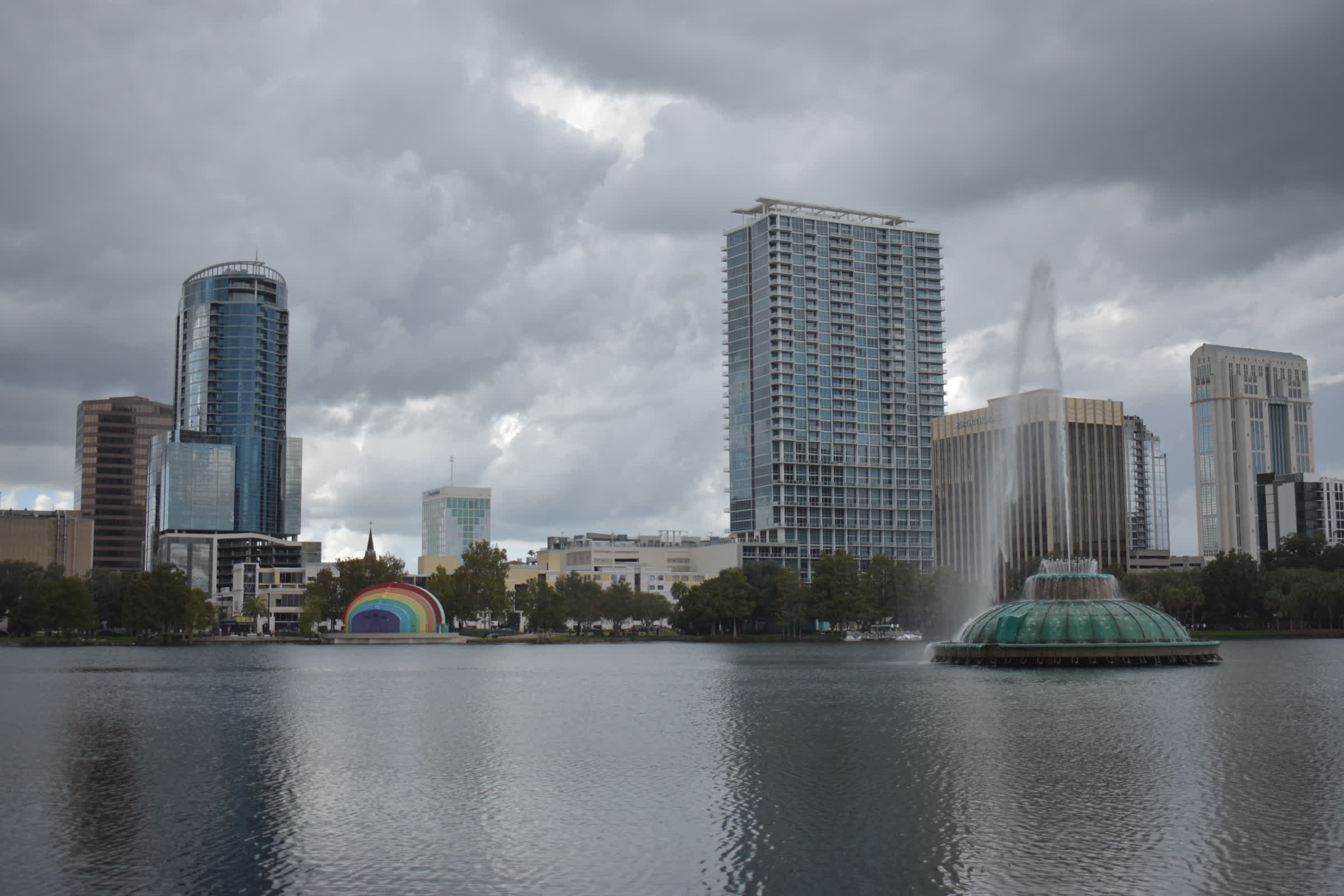
Thornton Park Overview
Downtown Orlando · Historic District · No HOA
From cattle barons to Orlando's most walkable village — since 1915
James Thornton, a local developer, platted and named the neighborhood in 1915, carving residential lots from land that had been home to cattle ranchers and citrus growers. Residents laid brick streets and built neo-classical and Tudor homes — the physical infrastructure of a prosperous early-20th-century Orlando. Washington Street emerged as the commercial spine. Orlando's first Publix supermarket opened here in 1940 at what is now the site of Dexter's restaurant.
The neighborhood declined sharply after Colonial Plaza mall opened two miles away in the 1960s, and Walt Disney World's 1971 debut pulled population westward. By the 1980s Lake Eola had earned the grim nickname "Lake Eerie-ola." Revitalization began when residents like Sue Macnamara organized historic preservation campaigns, and young professionals — particularly from the LGBTQ+ community — purchased and renovated abandoned bungalows at $50,000–$150,000. Dexter Richardson's 1996 restaurant opening at the old Publix site on Washington Street created critical mass. The Thornton Park Centralmixed-use project ($31M, 56 loft condos, Starbucks, bookstore) opened in 2001 and signaled the neighborhood's full arrival.
Today Thornton Park is a neighborhood of roughly 600 permanent residents — tightly knit, actively organized through the Thornton Park Neighborhood Association, and anchored by a Thornton Park District Main Street program (National Historic Trust) with 60+ locally-owned shops, restaurants, and services. The boundaries per the neighborhood association: Robinson Street (north), Summerlin Avenue (west), the 408 expressway (south), and Brown Avenue (east). The defining physical experience: brick-paved streets shaded by towering oaks dripping with Spanish moss, with Lake Eola five minutes west and downtown Orlando five minutes north.
Thornton Park essentials
- ✦ Established: 1915 by developer James Thornton
- ✦ Lake Eola: 5–10 min walk from most addresses
- ✦ No HOA: Historic neighborhood, no mandatory fees
- ✦ Washington Street: 60+ locally-owned businesses
- ✦ Main Street program: National Historic Trust designation
- ✦ Walk Score: 83 — Very Walkable
- ✦ Dog-friendly: One of Orlando's most dog-friendly districts
- ✦ LGBTQ+ welcoming: Deep community roots since the 1990s
What buyers get wrong
Thornton Park is sometimes conflated with the broader "downtown Orlando" high-rise corridor. It's a different product entirely — historic SFR bungalows on brick streets, not towers. The neighborhood is also distinct from Lake Eola Heights (federally designated historic district to the northeast) and South Eola (the lake-facing sub-area). Each has its own character and price profile.
How Thornton Park fits the market
Want to understand how Thornton Park compares to other Orlando's urban and suburban options? See the complete guide to Orlando's residential communities — from urban bungalows to lakefront estates.
The defining anchor
Lake Eola — the reason people move here
A 23-acre sinkhole lake, roughly 80 feet deep, with a 0.9-mile walking path. Most Thornton Park addresses are 5–10 minutes on foot. No other Orlando residential neighborhood has this relationship to a major urban park.
Daily life amenities
Lake Eola Park
- ✦ 0.9-mile paved path — circumference walk, jogging, cycling
- ✦ Linton E. Allen Memorial Fountain — 6-min seasonal light show nightly
- ✦ Swan paddle boats — available since ~1925; wheelchair-accessible; up to 5 people; 30-min rentals
- ✦ Walt Disney Amphitheater — free concerts, films, holiday events, Come Out With Pride main stage
- ✦ Chinese pagoda — lakeside landmark with koi pond and seating
- ✦ Playgrounds and picnic areas
- ✦ Relax Grill — casual waterside dining at the swan boat dock
Weekly and annual events
The event calendar
- ✦ Orlando Farmers Market — every Sunday at Eola Dr. & Central Blvd. Three decades running. Fresh produce, crafts, live entertainment.
- ✦ Come Out With Pride — Lake Eola every October. 220,000+ attendees (2023). One of the largest single-day Pride events in the U.S.
- ✦ Thornton 2nd Thursday Wine & Art Walk — monthly neighborhood event, 12+ stops
- ✦ Holiday celebrations — New Year's Eve, July 4th fireworks, seasonal festivals at the amphitheater
- ✦ Thornton Park Night Market — Thursdays and Fridays on Washington Street
Buyers who want a neighborhood where "something is always happening at the park" — this is that neighborhood.
Sub-areas
5 Thornton Park sub-areas — each with its own character
The neighborhood association covers Robinson to Brown Ave, Summerlin to the 408. Sub-area lines are informal — based on character, price tier, and proximity to Lake Eola or Washington Street.
Washington Street Core
$650K–$950K
Brick streets · wine bars · most walkable
The commercial and social heart of Thornton Park — Washington Street from Summerlin Ave to Mills Ave. The white-pillared 1926 Washington Street Bridge is the neighborhood's signature landmark. Homes here sit within steps of 40+ restaurants and bars. Highest demand, fastest days on market.
Lake Eola Heights
$600K–$1.5M
National Register · 487 historic structures
Federally designated on the National Register of Historic Places (1992). Bounded roughly by Hillcrest St, N. Hyer Ave, Ridgewood St, and N. Magnolia Ave. Contains 487 historic structures — Craftsman, Colonial Revival, Mediterranean Revival, Mission Revival, Art Deco. The largest and most architecturally diverse historic district in the Thornton Park area.
South Eola / Lake Eola Park Facing
$700K–$1.5M
Lake views · skyline backdrop · premium location
The closest residential pocket to Lake Eola Park itself — some addresses with direct lake sightlines. Thornton Park Central (10 N. Summerlin Ave., 2001, 56 loft condos) anchors this sub-area. Also home to newer infill townhomes and renovated Mediterranean Revival single-family homes. Premium for Lake Eola proximity.
Central Avenue Residential
$580K–$850K
Quiet · original bungalows · mature oaks
Parallel streets north and south of Washington Street — East Central Blvd, East Pine St, East Livingston St. Original Craftsman and bungalow homes, longer blocks, mature oak canopy. Better balance of walkability and residential quiet. Slightly less price pressure than the Washington Street core.
Lake Lawsona / Fern Creek Edge
$500K–$800K
Eastern edge · larger lots · transitional
The eastern boundary of the Thornton Park neighborhood association extends toward Brown Avenue, overlapping with the Lake Lawsona historic sub-district. Larger lots, more transitional character. Access to the 408 and Bumby Avenue. The entry tier for Thornton Park's single-family historic homes.
Architectural character
Brick streets, oak canopy, and a century of craftsmanship
Thornton Park developed between 1911 and the 1950s — the residential area is almost entirely historic, with the Washington Street commercial district as the only major exception. The dominant housing stock is Craftsman bungalows: intricate woodwork, spacious front porches, low-pitched roofs, original hardwood floors. Lot sizes typically run from a compact 5,000 sq ft to 8,500 sq ft for larger corner lots. Home square footage: 900–2,400 sq ft for original historic stock; infill townhomes push 2,000–3,200 sq ft.
The brick-paved streets — many original to the 1910s–1920s construction — are the neighborhood's most distinctive physical feature. They create a slower, more European street character that sets Thornton Park apart from every other downtown Orlando residential area. Combined with the mature oak canopy dripping Spanish moss, the streetscape is arguably the most visually distinctive in Orlando.
Lake Eola Heights extends and intensifies this character with 487 federally designated historic structures spanning Farmhouse, Colonial Revival, Craftsman, Mediterranean Revival, Mission Revival, Art Deco, and Minimal Traditional styles — a near-complete catalog of American residential architecture from 1905 to 1955.
Craftsman Bungalow
1910s–1940sIntricate woodwork, spacious front porches, low-pitched roofs, exposed rafter tails, built-in cabinetry. The dominant residential type on Washington Street side streets.
Colonial Revival
1905–1930sWhite columns, symmetrical facades, shuttered double-hung windows. Found most densely in Lake Eola Heights proper.
Mediterranean Revival
1920s–1950sStucco exteriors, barrel-tile roofs, arched windows and doorways. More common in the South Eola sub-area and infill construction.
Mission Revival
1910s–1930sCurvilinear parapets, red clay tile roofs, round-arched openings. Less common than Craftsman or Colonial Revival but well-represented in Lake Eola Heights.
Art Deco / Minimal Traditional
1930s–1950sStreamlined facades, flat or low-pitched roofs, decorative concrete blocks. Post-war era infill alongside the earlier bungalows.
Schools · OCPS
Blankner K-8 anchors the neighborhood school picture
Orange County Public Schools earned an "A" from the Florida Department of Education in both 2024 and 2025. Thornton Park straddles ZIP 32801/32803 — confirm your exact school assignment via OCPS Find My School before closing.
Blankner K-8 — the neighborhood standout
2500 S. Mills Ave., 32806 · Grades PK–8 · 810 students · 14:1 ratio
A-rated for 20 consecutive years. Programs: Gifted/Talented, Project Lead The Way, Orchestra (grades 4–8), fine arts PK–8, Deaf & Hard of Hearing program. The standout neighborhood school option for Thornton Park families.
20 consecutive A ratings from Florida DOE — the single most consistent K-8 school in the Thornton Park / downtown area.
High School
Boone High School
9–12 · Niche B+
Primary high school zone for most Thornton Park 32801/32803 addresses. Named for Orlando pioneer James Gamble Boone. Established programs in JROTC, performing arts, and athletics.
Edgewater High School
9–12 · Niche B
Some northern Thornton Park addresses zone to Edgewater instead of Boone. Confirm via OCPS Find My School — the boundary runs through the neighborhood.
Important: The Boone/Edgewater boundary runs through the neighborhood. Always verify via OCPS Find My School before finalizing a purchase if high school zoning matters to your household.
Private alternatives
- Trinity Preparatory School — PK–12 · Episcopal · Winter Park · 20-min commute · Niche A+
- The Christ School — K–8 · Independent Christian · downtown adjacent · short commute
- Bishop Moore Catholic High — 9–12 · FHSAA 4A · College Park · ~15 min from Thornton Park
- Lake Highland Preparatory — PK–12 · College Park · Niche A+ · one of Florida's top private schools
Many Thornton Park buyers — urban professionals, empty nesters, and second-home purchasers — have no school-age children and select the neighborhood entirely on walkability, architecture, and lifestyle. School zone is a secondary filter for this buyer profile.
Washington Street & surrounds
60+ locally-owned businesses in a walkable six-block district
Thornton Park District is an Orlando Main Street program — the National Historic Trust's commercial revitalization designation. Wine bars, neighborhood restaurants, boutiques, and coffee shops within a single walkable stretch. No chains dominate this strip.
Eola Wine Company
The neighborhood's wine anchor — 50 wines by the glass, craft beer, light bites at 430 E. Central Blvd. Steps from Lake Eola.
The Falcon Bar & Gallery
Wine bar with rotating art gallery — eclectic, intimate, consistently well-rated.
RusTeak Thornton Park
Contemporary steakhouse at 101 S. Eola Dr. — local wood-fired cooking, strong wine list.
Anthony's Thornton Park
Nearly 30 years of world-class pizza at 100 N. Summerlin Ave. Upside-down pizza and aperol spritzes are signatures.
The Stubborn Mule
Neighborhood bar with craft cocktails and American comfort food on Summerlin.
Burton's Thornton Park
801 E. Washington St. — vibrant bar hub with tacos, seafood, and craft beer.
The Classic
805 E. Washington St. — smash burgers, thick milkshakes, late night until 2 AM weekdays.
Aku Aku Tiki Bar
Tiki bar on Washington Street — frozen drinks, tropical cocktails, the neighborhood's party outpost.
JINYA Ramen Bar
Thornton Park location of the national ramen chain — perennially popular with neighborhood residents.
Maxine's on Shine
Neighborhood restaurant with an eclectic fine-dining atmosphere — menu presented as a 'stage show' (Opening Acts / Mainstage). Weekend brunch institution.
Osteria Ester
Italian neighborhood restaurant — one of the higher-rated dining options in the immediate area.
Cavo's Bar & Kitchen
Thornton Park neighborhood bar with cocktails and kitchen.
The Thornton Park 2nd Thursday Wine & Art Walk
Monthly neighborhood event — 12+ stops, local artists, wine tasting. The single best event to experience the neighborhood before you buy. Held every second Thursday of the month on Washington Street.
Commute & Access
Walk to work. Walk to Lake Eola. 20 min to MCO.
Thornton Park's walk score of 83 is the highest of any predominantly single-family neighborhood in Orlando. The free Lymmo circulator and Church Street SunRail give car-free options downtown. The 408 along the southern boundary provides fast access east.
| Destination | Time / Distance | Route / Notes |
|---|---|---|
| Lake Eola Park | 5–10 min walk | ~0.5 mi from Washington Street core |
| Dr. Phillips Center for the Performing Arts | 5–8 min walk | ~0.3 mi west on Central Blvd |
| Downtown employment core | 10–15 min walk | ~1 mi — or 5-min bike |
| Church Street SunRail Station | 22 min walk / 5 min Lymmo | Free Lymmo downtown circulator connects to SunRail |
| Lymmo circulator (free) | On-route stops | 3 downtown lines — connects to Lynx Central, SunRail, downtown destinations |
| I-4 via downtown | ~5 min drive | Access eastbound via Robinson/408 or westbound via downtown |
| Orlando International Airport (MCO) | ~20–22 min | ~15 mi via I-4 south + 528 Beachline |
| Winter Park (Park Ave) | ~15–18 min | Via 17-92 north or I-4 + Fairbanks |
| Universal Orlando | ~20 min | I-4 west — reverse commute, minimal friction |
| Walt Disney World | ~30–35 min | I-4 west + SR-535 |
SunRail: Church Street Station
The Church Street SunRail station is roughly a 22-minute walk from the Washington Street core — or a short Lymmo ride. SunRail runs north–south through the I-4 corridor, connecting downtown to DeBary (north) and Poinciana (south). For downtown employees and MCO travelers, SunRail reduces parking friction.
Lymmo — free downtown circulator
The City of Orlando operates three free Lymmo bus lines through downtown, connecting Thornton Park to Lynx Central Station, SunRail, and downtown destinations. For car-light households, the Lymmo is the daily connection to everywhere within the urban core.
Market Data · 32801 · Downtown Orlando
Constrained supply, consistent appreciation, 43-day average DOM
Thornton Park's historic SFR supply is genuinely constrained — tear-downs are effectively prohibited under historic protections, and most owners stay 7–10+ years. The result is a thin, consistently appreciating market. Median SFR prices ranged $680K–$997K across various 2025–2026 data windows; the variation reflects the wide condition spread between unrenovated and fully renovated stock.
| Tier | Price Range | Terms | Notes |
|---|---|---|---|
| Historic SFR — renovated | $750K–$1.5M+ | Cash + conventional | Fully renovated Craftsman or Mediterranean bungalows with modern kitchens, baths, and systems. Top of the market. Move-in condition. Comp premium over unrenovated peers is 20–35%. |
| Historic SFR — original | $580K–$750K | Mostly conventional | Original or lightly updated bungalows. Hardwood floors, front porches, mature oak canopy. Renovation upside for buyers willing to put in work. The most common transaction type. |
| Infill / newer construction SFR | $800K–$1.8M | Conventional + cash | Post-2000 infill townhomes, row houses, and newer SFR builds. Modern floor plans, higher square footage. Mix of Mediterranean Revival and contemporary styles. |
| Thornton Park Central lofts | $350K–$560K | Conventional / FHA-eligible | The 2001 mixed-use loft condos at 10 N. Summerlin Ave. Industrial-modern aesthetic — exposed duct work, high ceilings, floor-to-ceiling windows, balconies. 47 units, 6 floors. |
| Other downtown-adjacent condos | $280K–$650K | Varied | Various downtown high-rises and mid-rises within walking distance of Thornton Park. 101 Eola, Camden Thornton Park apartments, and similar. For buyers who want the address without the SFR premium. |
Key market dynamics
- ✦ Historic protections limit demolition — no teardown flood, unlike suburban markets
- ✦ Average DOM: ~43 days for correctly priced homes
- ✦ Renovation premium: 20–35% over unrenovated peers on the same block
- ✦ Inventory: Thin by design — typical owners stay 7–10+ years
- ✦ No HOA fees: Zero mandatory monthly costs beyond city taxes
Price-per-sq-ft context
- ✦ Thornton Park median PSF: ~$463 (Redfin, early 2026)
- ✦ That PSF figure is up ~17% year-over-year at last reporting
- ✦ Historic SFR bungalows typically run 900–2,400 sq ft
- ✦ $463 PSF × 1,600 sq ft = ~$741K median — consistent with observed $650K–$900K range
- ✦ Fully renovated homes command $525–$600 PSF or above
Who buys here
The 6 buyer types Thornton Park actually transacts with
The Urban Professional
Downtown or Dr. Phillips Center-adjacent employee who wants to walk or bike to work. Prioritizes walkability, neighborhood energy, and proximity to restaurants. Age 28–45. Budget $600K–$900K for a renovated bungalow or Thornton Park Central loft.
The Empty Nester Downsize
Couple or individual who spent 20 years in a suburban 4/3 in Windermere or Lake Mary. Kids are out. Now wants to walk to Lake Eola, dinner, and the farmers market. Budget $700K–$1.2M. Surprise demographic — the 'grown-up downtown' buyer.
The Lake Eola Devotee
The buyer who specifically says 'I want to walk to Lake Eola every morning.' May not have done detailed neighborhood research — they just know Lake Eola is the anchor. Often buys on the South Eola / Lake Eola Heights side for maximum lake proximity.
The Renovator / Value-Add Buyer
Buys an unrenovated bungalow at $580K–$680K, puts $150K–$200K into kitchens, baths, and systems, and either keeps it (appreciation + quality of life) or resells at $850K+. Thornton Park's constrained supply of historic SFR makes this strategy compelling when done well.
The LGBTQ+ Community Buyer
Orlando's Come Out With Pride centers on Lake Eola. The neighborhood has deep LGBTQ+ roots — the 1990s revitalization wave was substantially driven by LGBTQ+ residents. At ~4.1% same-sex households, Thornton Park far exceeds national averages. A welcoming, affirming neighborhood at any price tier.
The Second Home / Pied-à-Terre Buyer
Corporate traveler or part-time Floridian who wants a downtown Orlando base that doesn't feel like a hotel. Thornton Park Central lofts work well for this buyer — manageable square footage, walkable, rental-permissive condo structure.
Hidden Gems
Insider notes most buyers miss
Thornton 2nd Thursday Wine & Art Walk
Monthly neighborhood event — 12+ stops for wine tasting and artwork from local artists. The best single event for meeting Thornton Park residents before you buy.
Orlando Farmers Market at Lake Eola
Every Sunday at the southeast corner of Lake Eola Park (Eola Dr. & Central Blvd). Three decades running. Fresh produce, handmade crafts, live entertainment — a weekly anchor for Thornton Park household routines.
Walt Disney Amphitheater at Lake Eola
Free and ticketed concerts, films, holiday celebrations, and the Come Out With Pride main stage. Residents literally walk from their front door to world-class events.
Washington Street Bridge (1926)
The neighborhood's most photographed landmark — a South Florida-style white-pillared 1926 bridge designated a City of Orlando Historic Landmark in 1991. Often used as a backdrop for engagement photos.
Dickson Azalea Park
A hidden green space just east of Thornton Park — azalea-lined trails, Fern Creek, and a footbridge. One of downtown Orlando's least-discovered parks, popular with Thornton Park dog walkers.
Linton E. Allen Memorial Fountain light show
Lake Eola's iconic fountain runs a 6-minute light-and-water show nightly; themes change seasonally. Visible from the South Eola and Lake Eola Heights streets. One of the reasons Thornton Park residents never feel they need to go anywhere.
Thornton Park TPD Night Market
Recurring Thursday–Friday evening market with local vendors on Washington Street — the neighborhood's version of a Main Street evening economy.
Homes for Sale in Thornton Park, FL
Live Stellar MLS listings · ZIP 32801
Browse active homes for sale in Orlando, Central Florida, sourced from Stellar MLS and refreshed every 15 minutes. Current inventory includes single-family homes, condos, and waterfront properties across a range of price points.
Honest cross-sell
When Thornton Park isn't the right fit
Thornton Park wins for buyers who prioritize walkability, historic character, and Lake Eola proximity. If your priority is different, here's what we'd recommend instead.
| If you want… | Better fit | Why |
|---|---|---|
| Urban walkability without SFR renovation risk | Baldwin Park→ | New urbanist master plan, walkable town center, built 2001+; no renovation risk |
| More square footage and suburban quiet | Winter Park→ | Park Ave walkability plus larger lots; quieter residential streets |
| Newer construction, smart home features, master-planned | Lake Nona→ | Built 2010+; tech infrastructure; Medical City employment |
| Lake frontage with an actual dock | Dr. Phillips→ | Sand Lake Chain dockable waterfront; 15 min to Disney |
| Same historic character, slightly less price pressure | College Park→ | Early 20th century bungalows; Edgewater Drive retail; Ivanhoe Village adjacent |
| Maximum exclusivity and guard-gated privacy | Isleworth→ | Butler Chain of Lakes; ultra-luxury guard gate; different planet from downtown |
If the buyer says "I want to walk to a lake every day," sell them Thornton Park. If they need a garage for two trucks and a boat, look further out.
Thornton Park, FL — FAQ
What makes Thornton Park different from other downtown Orlando neighborhoods?
Thornton Park is the only downtown Orlando neighborhood that functions as a genuine residential village rather than a high-rise corridor. The brick-paved streets, Craftsman bungalows from the 1910s–1950s, and Washington Street's independent restaurant and wine bar scene create a European pocket-neighborhood feel. There is no HOA, which is unusual at this price tier. Neighbors know each other, streets are quiet at night, and the neighborhood maintained its character through downtown Orlando's entire urban renaissance. The defining feature is Lake Eola — most Thornton Park addresses are a 5–10 minute walk from the lake, making it the neighborhood of choice for buyers who say 'I want to live near Lake Eola.'
What do homes cost in Thornton Park?
Thornton Park single-family bungalows typically trade in the $600K–$900K range depending on condition, size, and proximity to Washington Street. Renovated homes in move-in condition and those closest to Lake Eola command the top of that range. Larger Mediterranean Revival infill homes and newer construction push $900K–$1.5M+. Thornton Park Central loft condos (2001 vintage, 56 units at 10 N. Summerlin Ave.) run roughly $350K–$560K. The neighborhood has a constrained supply of historic SFR homes — most owners stay 7–10+ years — which keeps inventory tight and supports pricing. Average days on market runs 43–60 days for correctly priced homes.
How far is Thornton Park from Lake Eola?
Most Thornton Park addresses are within a 5–10 minute walk of Lake Eola Park — a 23-acre urban lake with a 0.9-mile walking path, the Linton E. Allen Memorial Fountain (with a seasonal light show), the Walt Disney Amphitheater, swan paddle boats (available since roughly 1925), the Orlando Farmers Market (every Sunday on the southeast corner), and the Chinese pagoda. The neighborhood sits immediately east of the lake, and the Lake Eola skyline view is the defining postcard of Thornton Park living. For context, the lake circumference is 4,493 feet — many residents complete a full lap before work.
Does Thornton Park have an HOA?
No — Thornton Park is a historic neighborhood with no mandatory HOA. This is a significant differentiator at the $600K–$1M price tier, where most Orlando neighborhoods carry HOA fees. Residents are, however, subject to City of Orlando historic preservation guidelines if their property falls within a designated overlay (Lake Eola Heights Historic District boundaries extend into parts of Thornton Park). Always verify historic overlay restrictions with the City of Orlando's Historic Preservation Office before purchasing or planning renovations.
What schools serve Thornton Park?
Thornton Park sits in 32801/32803, served by Orange County Public Schools. Blankner K-8 (2500 S. Mills Ave., 32806) is the area's standout school — an A-rated K-8 with a 9/10 GreatSchools rating, 20 consecutive A ratings, 810 students, and a 14:1 student-teacher ratio. Programs include gifted/talented, Orchestra for grades 4–8, and fine arts. Boone High School is the standard high school zone for most Thornton Park addresses. Many Thornton Park buyers — urban professionals, empty nesters, and same-sex households — prioritize walkability and neighborhood character over school zone when choosing this neighborhood. Always confirm your exact school assignment via the OCPS Find My School tool before closing.
Is Thornton Park safe?
Thornton Park has undergone substantial revitalization since the 1980s, when Lake Eola was nicknamed 'Lake Eerie-ola.' Today the neighborhood is one of downtown Orlando's most desirable residential pockets and draws premium pricing that reflects its desirability. Like all urban neighborhoods, it benefits from active resident involvement — the Thornton Park Neighborhood Association meets quarterly and has a history of successful advocacy including the Washington Street Bridge historic landmark designation and the Thornton Park fountain installation. As with any urban purchase, we recommend visiting at different times of day and consulting current crime maps for the specific block.
What is the Washington Street Bridge?
The Washington Street Bridge is a historic 1926 South Florida-style structure with white pillars that crosses the road near Thornton Park's commercial spine. It was designated a City of Orlando Historic Landmark in 1991 through the advocacy of resident Sue Macnamara, who organized a door-to-door petition campaign to save it during the neighborhood's revitalization era. It has become one of the neighborhood's most photographed landmarks and is used as a backdrop for community events.
What is the Lake Eola Heights Historic District?
The Lake Eola Heights Historic District is a federally designated U.S. historic district listed on the National Register of Historic Places on January 16, 1992. It was designated a local historic district by the City of Orlando in 1989 following a petition by the Lake Eola Heights Historic Neighborhood Association. The district contains 487 historic buildings and is bounded roughly by Hillcrest Street, North Hyer Avenue, Ridgewood Street, and North Magnolia Avenue. Architectural styles range from Colonial Revival and Craftsman to Mediterranean Revival, Mission Revival, and Art Deco. The land traces to citrus entrepreneur Jacob Summerlin's 200-acre purchase in the late 1800s; the Great Freeze of 1894–95 ended his citrus operations and prompted residential subdivision. Most structures date from the district's greatest growth period: 1905–1925.
How is the commute from Thornton Park?
Thornton Park is one of the best-situated neighborhoods in Orlando for car-free and transit commuting. Downtown employment is a 10–15 minute walk or 5-minute bike ride. The Church Street SunRail station is about a 22-minute walk (or a short Lymmo ride). The free Lymmo downtown circulator connects Thornton Park to downtown destinations. For drivers, Orlando International Airport (MCO) is roughly 20–22 minutes. The 408 expressway runs along the neighborhood's southern boundary (Robinson to Brown Ave), providing quick eastbound access. I-4 is accessible via downtown in about 5 minutes.
Is Thornton Park part of the Orlando Pride / Come Out With Pride festival area?
Yes — Lake Eola Park is the home of Orlando's Come Out With Pride festival, which moved to Lake Eola in 2007 and has grown to 220,000+ attendees as of 2023, making it one of the largest single-day Pride celebrations in the region. This connection has historical roots: in the 1990s revitalization, many early Thornton Park renovators were members of the LGBTQ+ community. The neighborhood records an unusually high proportion of same-sex households — roughly 4.1% versus a national norm well below 1%. The Pulse nightclub memorial is nearby; since 2016 every Orlando Pride has carried a memorial dimension with 49 names read and 49 seconds of silence. Lake Eola is the geographic and emotional center of LGBTQ+ Orlando.
Downtown Orlando & Adjacent Neighborhoods
Interested in Thornton Park?
Thinking of selling?
What's Your Thornton Park Home Worth?
Get a real, agent-prepared valuation for your Thornton Park home — based on actual Thornton Park sales, not an automated estimate. No obligation, and your information stays between you and Ryan.
- Priced from real Thornton Park comparable sales
- Prepared by Ryan personally — not a computer guess
- A reply within one business day